

In chapter six every arrival ended the same way. You cleared the approach, told the pilot to contact tower, and the flight was no longer your responsibility. The next four chapters are about the seat that takes it from you. The tower cab sits above the field with glass on all sides. The controller in it is called Local controlThe tower position that owns the active runway and the sky immediately around it; Tower on the radio. Every use of the runway happens on its say-so.Open in the glossary on the paperwork and Tower on the radio, and the piece of the airport that controller works is the one every flight at Bayview has to cross: the runway.
The seat changes more than the view. Approach is a radar position. You know your traffic by its data blocks, and nothing you control is ever closer than a few miles to anything else. Tower is a visual position. The traffic is out the window, the margins are measured in seconds, and the resource you protect is a strip of pavement that only one aircraft may use at a time.
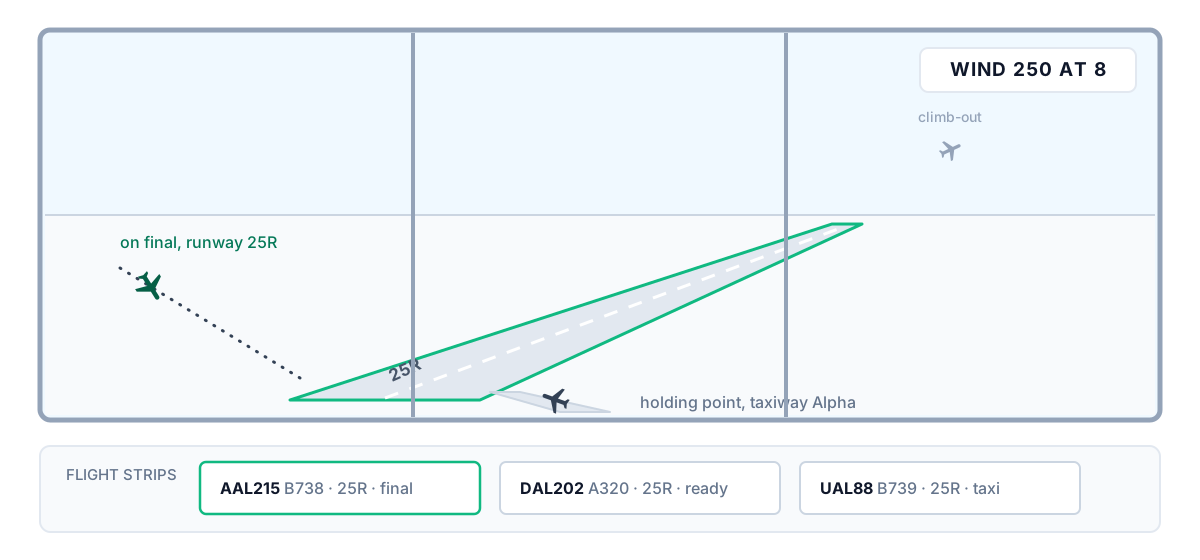
What the tower owns
Local control owns the active runway and the sky immediately around it. That means the last stretch of final, the pavement itself, and the first climbing mile of every departure. Everything else belongs to a neighbor. Ground controlThe tower position that owns the taxiways. It delivers departures to the holding point and takes arrivals back once they are clear of the runway.Open in the glossary owns the taxiways. Approach owns the arrivals until they are established on final. When a landed aircraft rolls clear of the runway it belongs to ground again. The rulebook states the property line in one sentence and then says what it requires of everyone else:
The local controller has primary responsibility for operations conducted on the active runway and must control the use of those runways.
Ground control must obtain approval from local control before authorizing an aircraft or a vehicle to cross or use any portion of an active runway.
The approval rule matters more than it looks. A runway crossing seems routine and a vehicle inspecting the pavement seems harmless, and runway accidents begin with both. For that reason the manual makes the local controller the gatekeeper. Ground control, a vehicle driver and any other controller all need your approval before anything goes onto your runway. Chapter thirteen covers what you do when that line gets crossed anyway.
Looking out the window
At approach you relied on the scope because the scope was your only picture of the traffic. The cab has displays as well, but the manual is clear about where a tower controller's eyes belong:
a. Local controllers must visually scan runways to the maximum extent possible.
b. Ground control must assist local control in visually scanning runways, especially when runways are in close proximity to other movement areas.
A radar picture tells you where an aircraft was on the last sweep. The window tells you where it is now. The runway you cleared someone onto half a minute ago may no longer be the runway in front of you, because a landed aircraft may have missed its turnoff or a departure may still be gathering speed well after you expected it to be airborne. Build a routine around this. Look before you speak, look again while the ReadbackThe pilot repeating a clearance or instruction back so the controller can verify it was received correctly.Open in the glossary comes in, and sweep the full length of the pavement instead of only the part where you expect the action.
The habit comes straight from the scan in chapter nine. At the scope you swept every data block in a fixed order so that no converging pair could surprise you. In the cab the scan is shorter and faster: final, runway, Holding pointThe marked position at the runway entrance where a departure waits for its clearance. Crossing the marking without one is a runway incursion.Open in the glossary, climb-out. It runs before every clearance, because the things that can invalidate a runway plan happen in seconds.
Who hands you what
You met the control chain in chapter one from the middle of it. From the cab it looks like this. Approach builds the line of arrivals and delivers each one established on final, spaced and in order. Ground taxis the departures out and parks them at the holding point on taxiway Alpha. Both neighbors feed you, their two streams meet on the same runway, and the merge is yours to manage.
An arrival checks in a few miles out, already on the ILS. You have nothing to give it yet, so you answer with an acknowledgement and the wind:
Bayview Tower, American Two One Five, ILS runway two five right.
American Two One Five, Bayview Tower, continue approach, wind two five zero degrees eight knots.
Continuing approach, American Two One Five.
Continue approachContinue approach, wind two five zero degrees eight knots.Keep flying the approach; the landing clearance is still to come. It authorizes nothing about the runway.Open in the glossary authorizes nothing. It tells the pilot that you have them, that the approach goes on, and that the decision about the runway is still to come. The landing clearance itself is a separate act with its own rules, and chapter twelve is built around it.
A departure arrives on your frequency from the other direction, by taxiway:
Bayview Tower, Delta Two Zero Two, holding point runway two five right, ready for departure.
Ready for departure is a report of the aircraft's state, and it does not commit you to anything. It means the aircraft is available to you the moment the runway has room for it. Knowing when the runway has room is the subject of chapter eleven.
The strip board is the plan
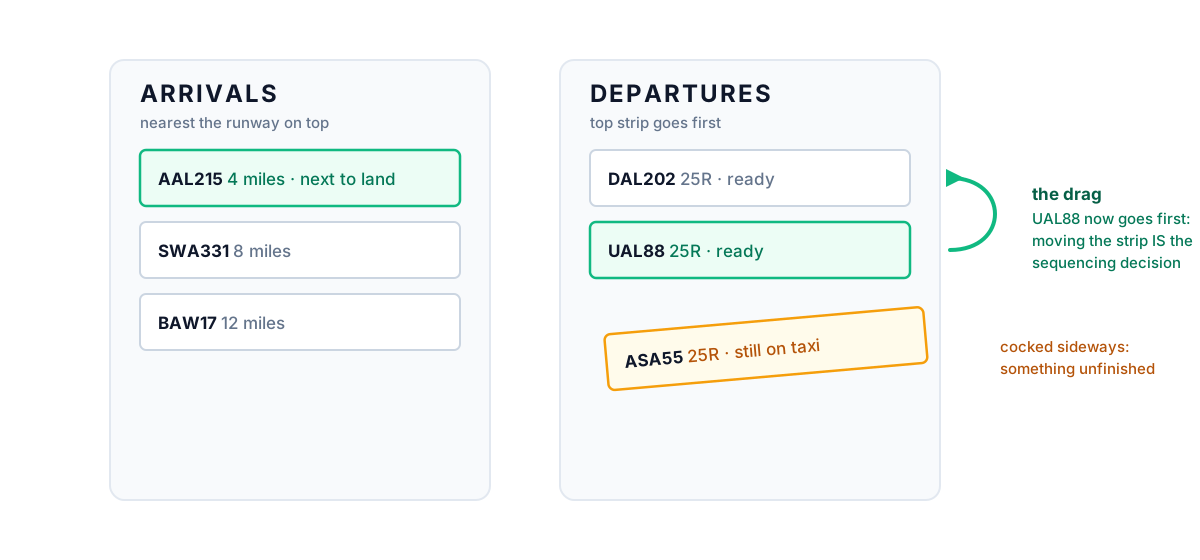
Every aircraft on your frequency is also a flight progress strip: a small printed slip carrying the callsign, the aircraft type, the runway and what the flight is here to do. Radar positions have largely traded paper for electronic lists. Towers have held on to strips longer than anyone, because a strip does two things a screen does poorly. It can be read in a half-second glance from across the cab, and it can be moved with one hand while your eyes stay out the window.
Where a strip sits on the strip board is what it means. The cab racks strips in bays, with one bay for each kind of work: arrivals on final in one, departures waiting in another. The order of strips inside a bay is the order you intend to work them. Sliding a strip up the bay is a sequencing decision. Cocking one sideways out of line is a reminder that something about that flight is unfinished. A supervisor reading your strip board can tell your whole plan without a word spoken, and so can you. The plan lives on the board, which leaves your attention free for the window.
In the Sim
In ATC Simulator the tower is its own shift. In the ready room you choose the seat the same way you choose the airport, and the interface follows the choice. In place of the scope, the cab view fills the screen with the out-the-window picture drawn from the tower's real vantage point on the field. You can zoom the way a controller leans into binoculars, close enough to read who is on short final and wide enough to hold the whole runway, and the scan this chapter teaches is what the view is for. The strip board is there as well. Every aircraft on frequency is a strip, the bays sort themselves by what each flight needs next, and moving a departure strip up or down its bay is how you set your takeoff order.
The neighbors are voices on the frequency with one difference from real life. Bayview Ground and Bayview Approach are played by the game. They deliver arrivals established on the ILS and departures at the holding point, and they do not make mistakes, so every problem on the runway is yours. There are two further divergences. The sim has no terrain or field elevation model, so both fields effectively sit at sea level and there is no elevation to add to the numbers you hear. And the coordination web of a real cab, meaning the phone lines, the crossing requests and the supervisor at your shoulder, is reduced to what happens on your frequency. That frequency is where the next three chapters take place.